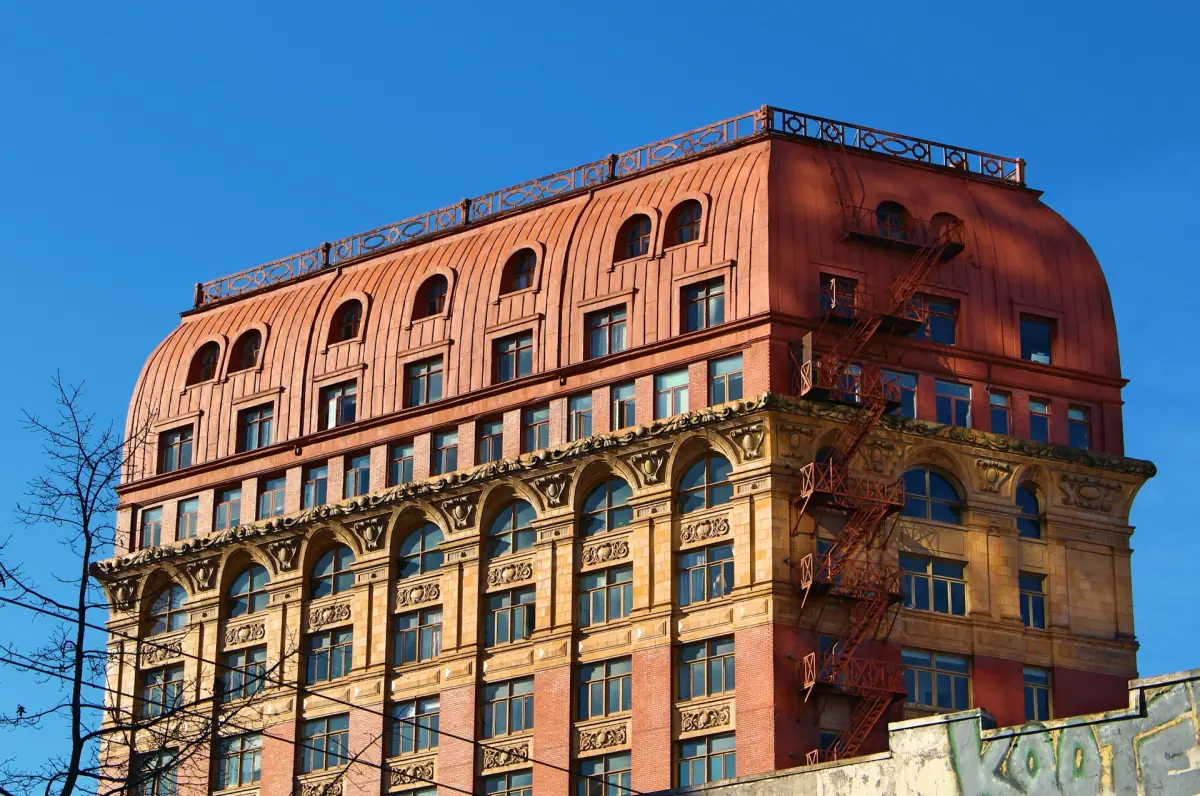
Vancouver history before the city charter
Vancouver history needs a starting point earlier than its municipal founding. The City of Vancouver acknowledges the unceded traditional territories of the Musqueam, Squamish and Tsleil-Waututh. Keep that context in view when reading the dates of incorporation, railway arrival and urban development. Those dates concern the formation of the municipality and its transport connections; they should not be mistaken for the beginning of habitation.
For a visit, this creates two different questions: whose territories the city occupies, and how the later municipality took shape. A short timeline can help with the second without replacing the first. Gastown and Yaletown provide places to consider the later streetscape, while the Indigenous context belongs to the understanding of the city as a whole. Approach the buildings as part of that account rather than treating the municipal date as the entire story.

Granville, incorporation and transport
Granville was an earlier name for the settlement. The municipality was incorporated on 6 April 1886 as Vancouver. Use that date for the city’s municipal foundation rather than for the beginning of the place itself. The next transport milestones give the chronology more shape: the first passenger train reached Vancouver in 1887, and streetcar operation began in 1890. The Vancouver railway date refers to arrival in Vancouver, separately from Port Moody.
| Milestone | Historical reference | How to read it |
|---|---|---|
| Earlier name | Granville | A stage in the settlement’s naming |
| 6 April 1886 | Municipal incorporation | The city’s formal foundation |
| 1887 | First passenger train arrival in Vancouver | A transport milestone |
| 1890 | Streetcar operation begins | A further urban transport milestone |
These dates make a useful framework for a walk, but individual facades need their own historical context. Compare the early core around Water and Cordova Streets with the warehouse character of Yaletown. That is a practical way to organise what to look at without assigning an invented construction date or original use to an individual building.
Our picks: History
Consider gastown theatrical storytelling walk for professional actor in character.
Hand-picked tours, booked through Viator. Prices are indicative starting prices in US dollars (as of November 2026). Tap a tour for live availability and the current price in your currency.

Gastown history through performance
A professional actor leads a theatrical walk through backstreets and passageways; the stories are presented as dramatic interpretation.
Gastown and a theatrical history walk
Gastown lies east of the Downtown core. The city’s historical account places the early urban centre around Water and Cordova Streets. For visitors, that gives a focused place to begin looking at the relationship between an older street setting and today’s city. Businesses have their own opening arrangements, so the neighbourhood should not be treated as an attraction with a single admission time.
The 105-minute theatrical Gastown walk is a different way to experience those streets. A professional actor in character presents a moving one-person play, with dramatic historical storytelling through backstreets and passageways. The meeting point is outside 356 Water Street, close to Waterfront Station for SkyTrain and SeaBus. Treat the performance as an interpretation of history, with character and drama, rather than a complete factual account of Vancouver’s past.
Choose that walk for the performance format. For a comparison of walking experiences and their arrangements, use the walking-tour guide. This history page keeps its focus on context and chronology, so the city’s background remains distinct from the choice of a particular guided experience.
Historic urban structure and warehouses
Downtown occupies a peninsula, with Burrard Inlet to the north and False Creek and Yaletown to the south. Gastown, Chinatown and Strathcona lie towards the east; the West End and Stanley Park are to the west. That geography helps place the early core within the modern city rather than imagining Gastown as the whole of Downtown. Use the water on either side as an orientation tool when connecting different neighbourhoods.
Yaletown has historic warehouses and loading platforms alongside present-day dining and shops. Its False Creek Seawall and water taxis give another setting for a visit. Look at the warehouse streets as a different part of the urban picture from the Water and Cordova Street core. Seeing both areas can make the city’s variety easier to understand, without assuming that a single architectural style or historical period explains every block.
For accommodation planning, the area guide connects these neighbourhoods to location and transport. It is useful when deciding where to begin a day, while the historical interest of a district remains a separate question from the choice of a place to stay.
Building a visit around the history
Begin with the early core in Gastown, then decide whether to continue towards the southern waterfront and Yaletown or reserve that area for another part of the stay. Keep your chosen walk manageable rather than adding every city landmark to a historical route. The sights guide covers the wider visitor programme, including museum and art visits, so those can be planned on their own terms.
Transport also belongs in the practical plan. Waterfront Station is the useful connection named for the theatrical walk’s meeting area. The public transport guide explains the wider system when the next part of the visit lies elsewhere. A modern journey helps connect the districts, but it should remain distinct from the historical railway and streetcar dates in the timeline.
Frequently asked questions
Was Vancouver founded in 1886?
The municipality was incorporated on 6 April 1886. That date concerns the city charter; the Indigenous context and habitation precede the municipal foundation.
When did passenger trains and streetcars arrive?
The first passenger train reached Vancouver in 1887, and streetcar operation began in 1890. Keep the Vancouver train arrival distinct from the earlier railway connection at Port Moody.
What kind of experience is the Gastown history walk?
It is a 105-minute theatrical walk with an actor in character and dramatic storytelling. Choose it for that interpretive performance rather than as a complete account of the city’s history.